

 By Sunshine Phillips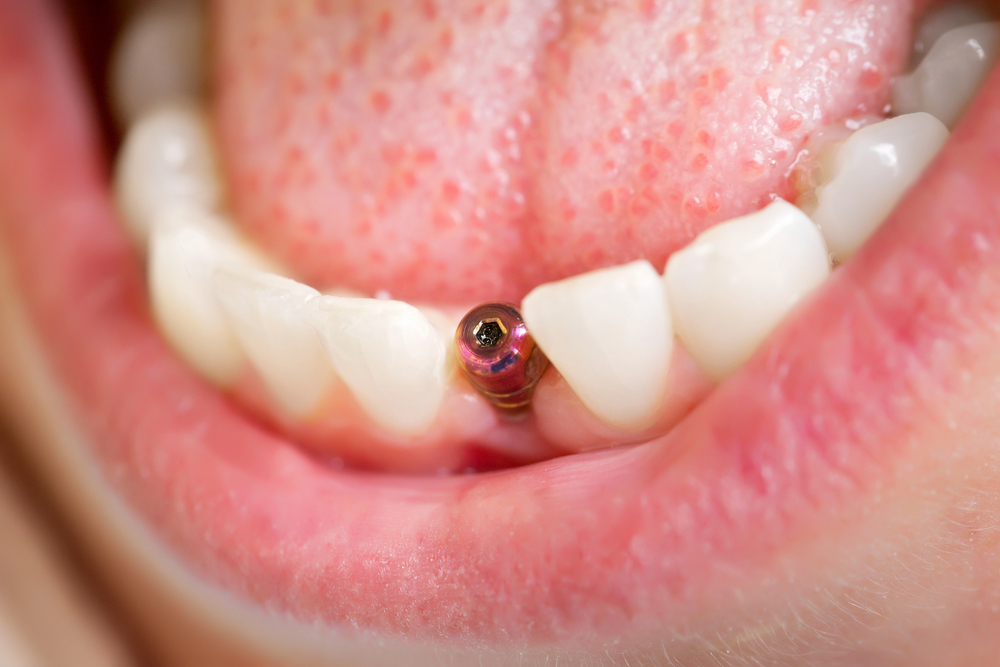
In contemporary Australia, oral health is undergoing a quiet but profound transformation—one driven not only by clinical expertise but by digital innovation and rising patient expectations. At the centre of this shift lies the growing demand for customised dental implants, a field that is rapidly evolving from standardised surgical solutions into highly personalised restorations shaped by precision engineering, biomaterials science, and intelligent dental software systems.
This convergence of biology and technology is redefining what it means to restore a smile. No longer are implants merely functional replacements for missing teeth; they are becoming bespoke anatomical reconstructions designed to integrate seamlessly with a patient’s facial structure, bite dynamics, and long-term oral health trajectory.
The Shift from Standard to Customised Care
Traditionally, dental implants were selected from a limited range of sizes and shapes, with adjustments made during surgery to achieve the best possible fit. While effective, this approach often relied heavily on practitioner experience and intraoperative judgment. In Australia today, however, patients are increasingly seeking solutions that feel less “generic” and more individually tailored.
This demand is being driven by several intersecting forces: an ageing population retaining more natural teeth into later life, higher aesthetic expectations influenced by social media, and a growing awareness of the long-term benefits of precision dentistry. As a result, clinics across Australia are embracing customised dental implants that are digitally planned and manufactured to match each patient’s unique oral anatomy.
Digital Planning and the Role of Dental Software
At the heart of this transformation is advanced dental software, which has fundamentally changed how implant dentistry is designed and delivered. Using high-resolution 3D imaging, intraoral scanning, and AI-assisted modelling, clinicians can now construct a virtual replica of a patient’s mouth with extraordinary accuracy.
This digital environment allows dentists to simulate implant placement before any physical procedure occurs. Variables such as bone density, nerve positioning, and occlusion forces can be analysed in detail, significantly reducing surgical uncertainty. The result is not just improved precision but a more predictable healing process and longer-lasting outcomes.
In Australia, where dental innovation is strongly supported by professional standards and technological adoption, this integration of dental software into implant workflows is becoming the norm rather than the exception. Practices that once relied on manual impressions are now transitioning to fully digital workflows that connect diagnostics, planning, and prosthetic fabrication in a continuous data-driven chain.
Personalisation as the New Clinical Standard
The concept of personalisation in dentistry extends beyond aesthetics. Customised dental implants are designed to replicate not only the visible crown of a tooth but also the hidden biomechanical relationships that support oral function. This includes bite alignment, load distribution across the jaw, and compatibility with surrounding teeth and gums.
Modern dental software enables clinicians to account for these factors with remarkable depth. Algorithms can predict stress points on implant structures and suggest modifications to improve durability. In some cases, machine learning models trained on thousands of previous cases can even assist in identifying optimal implant angles or materials for specific patient profiles.
This level of precision is particularly valuable in complex cases, such as patients with bone loss or previous implant failures. Instead of relying on one-size-fits-all solutions, Australian dental professionals can now design highly specific interventions that improve both functional and aesthetic outcomes.
The Manufacturing Revolution: From Screen to Mouth
Once an implant design is finalised using dental software, it is typically manufactured using computer-aided manufacturing (CAM) and 3D printing technologies. This direct digital pipeline eliminates many of the errors associated with traditional casting methods and significantly reduces turnaround times.
In Australia, dental laboratories are increasingly operating as digital production centres rather than purely manual workshops. Titanium and zirconia implants can be milled with micron-level precision, ensuring a near-perfect match between virtual design and physical product.
This integration of digital design and advanced manufacturing is one of the key reasons why customised dental implants are gaining momentum. Patients benefit from shorter treatment timelines, improved comfort, and restorations that feel more natural from the moment they are placed.
Patient Experience and Trust in Technology
Beyond clinical efficiency, there is also a psychological dimension to this shift. Patients are more engaged when they can visualise their treatment journey through dental software simulations. Seeing a 3D model of their future smile or understanding how an implant will integrate with their jaw structure builds trust and reduces anxiety.
In Australia’s competitive dental landscape, this transparency is becoming a differentiator. Clinics that incorporate digital planning tools not only improve clinical outcomes but also enhance patient communication and satisfaction. The ability to co-design treatment plans visually represents a new era of shared decision-making in oral health.
The Future of Dental Implants in Australia
Looking ahead, the evolution of customised dental implants is likely to become even more sophisticated. Emerging technologies such as artificial intelligence, biomechanical modelling, and regenerative biomaterials will further expand the capabilities of dental software platforms.
We are moving toward a future where implants may be designed not only to replace missing teeth but to actively support oral health maintenance, adapt to changes in bone structure over time, and integrate with real-time diagnostic monitoring systems.
In this context, Australia is well positioned as a leader in digital dentistry adoption. With strong clinical governance, advanced training institutions, and a population receptive to innovation, the country is likely to remain at the forefront of implant dentistry evolution.
The rise of customised dental implants in Australia reflects a broader shift in healthcare: from standardisation to personalisation, from analogue processes to digital ecosystems, and from reactive treatment to predictive design. At the centre of this transformation is dental software, which acts as both architect and bridge—connecting clinical insight with technological precision.
As innovation continues to accelerate, the future of oral health will not be defined solely by what dentists can repair, but by how precisely they can design, simulate, and optimise every aspect of a patient’s smile before a single procedure begins.