

 By Sunshine Phillips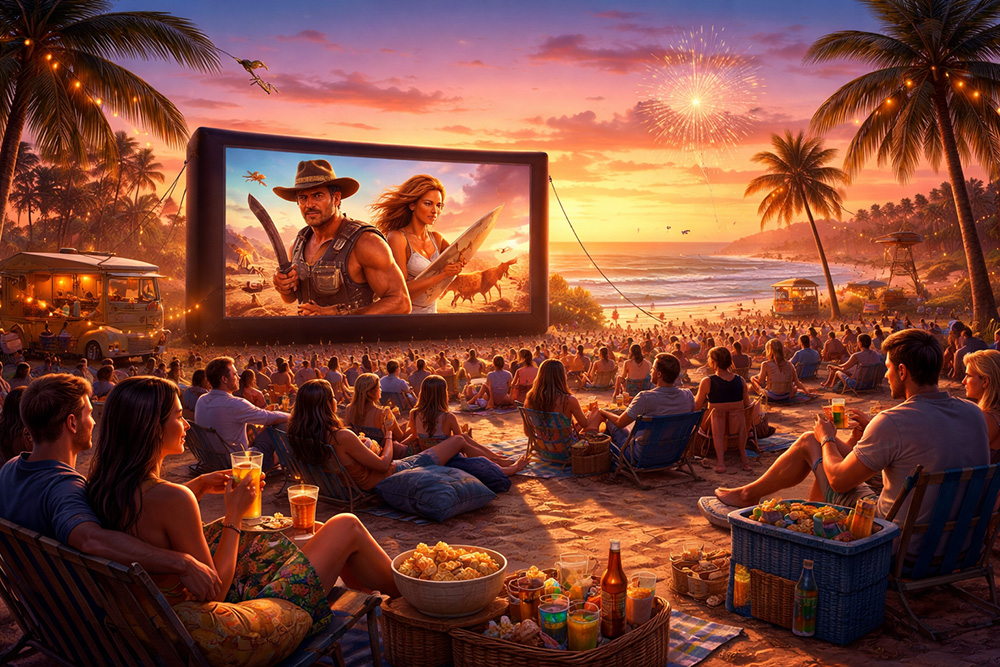
Australia has always lived at the edge of the map—and increasingly, at the edge of innovation. Long defined by vast landscapes, surf culture, and a laconic sense of humour, the nation is now crafting a sophisticated interplay between entertainment, lifestyle, and technology. In this intersection lies a new cultural architecture: one that is sunlit yet digital, relaxed yet ambitious, local in texture but global in reach.
Entertainment in Australia has historically been shaped by geography. Isolation once fostered a fiercely independent creative identity. From the rebellious energy of bands emerging out of Melbourne’s live music scene to globally recognised film productions shot against the dramatic backdrop of the Outback, the country learned to tell stories with distinctive grit and visual poetry. Today, that storytelling tradition finds new amplification through digital platforms. Streaming services have dissolved geographic constraints, allowing Australian series and films to reach global audiences instantly. What was once broadcast across a handful of channels is now projected into living rooms from Los Angeles to London.
Technology has not merely distributed content—it has transformed its creation. Australian filmmakers increasingly employ advanced visual effects and virtual production environments, reducing costs and expanding narrative ambition. In gaming, independent studios across cities like Brisbane and Sydney are producing globally successful titles, supported by a digitally fluent population and strong tertiary education networks. The democratization of content creation—podcasts recorded in spare bedrooms, TikTok creators filming at Bondi Beach—reflects a broader shift: entertainment is no longer confined to elite studios; it is participatory, decentralised, and immediate.
This technological acceleration deeply influences Australian lifestyle. Australians have long valued balance: work hard, but surf before sunrise; pursue success, but prioritise mateship. Digital infrastructure now reinforces this ethos. Remote work technologies allow professionals to live regionally while remaining connected to global markets. Coastal towns once reliant solely on tourism now host software developers and digital entrepreneurs. The broadband cable and the fibre line become quiet enablers of lifestyle freedom.
Yet this evolution raises intriguing tensions. The Australian identity is rooted in physicality—sport, outdoor exploration, embodied community. Rugby matches, cricket on summer afternoons, and weekend barbecues are tactile experiences. How does this physical culture reconcile with an increasingly screen-mediated life? The answer lies in hybridisation. Fitness apps track surf conditions and personal bests. Wearable devices monitor heart rate during bushwalks. Stadiums integrate augmented reality experiences for fans. Technology enhances the physical rather than replacing it.
Australian entertainment reflects this blend of analogue and digital sensibilities. Live festivals remain cultural cornerstones, from music gatherings in Byron Bay to arts festivals in Adelaide. But these events are now digitally amplified, streamed, hashtagged, and algorithmically curated. Audiences participate both on the ground and online, creating layered experiences that transcend geography. The crowd is both present and virtual, unified by shared digital signals.
Lifestyle brands emerging from Australia further illustrate this convergence. Companies rooted in wellness, eco-conscious design, and outdoor adventure leverage advanced e-commerce platforms and data analytics to scale globally. Sustainability—a defining feature of contemporary Australian lifestyle thinking—is supported by technological innovation. Solar adoption rates in Australian households are among the highest in the world, reflecting both environmental awareness and economic pragmatism. Smart home systems monitor energy usage, merging ecological values with digital precision.
Meanwhile, Australia’s multicultural fabric enriches its entertainment landscape. Migration from Asia, Europe, and the Middle East infuses film, music, and cuisine with hybrid identities. Technology acts as both bridge and amplifier, allowing diasporic communities to remain connected while contributing new narratives to the national story. Streaming playlists blend Indigenous hip-hop with K-pop influences. Restaurants use digital platforms to showcase fusion menus that reinterpret local ingredients through global techniques.
Crucially, Indigenous storytelling is gaining renewed prominence through digital media. Virtual reality projects and interactive documentaries are being used to share First Nations histories in immersive ways, allowing audiences to engage with ancient knowledge systems through cutting-edge formats. Here, technology becomes a tool of preservation rather than erasure, honouring narratives that predate the nation-state itself.
The economic dimension cannot be ignored. Australia’s technology sector has grown significantly, supported by fintech innovation, health-tech startups, and creative tech incubators. Entertainment intersects with these sectors through immersive media, digital marketing, and artificial intelligence-driven content recommendation systems. Algorithms now shape what Australians watch, read, and listen to. The question becomes not only what stories are told, but how discoverable they are within a sea of digital abundance.
Yet for all the innovation, there remains a uniquely Australian undercurrent: authenticity. Audiences value relatability over polish, humour over pretension. Influencers gain traction not by mimicking Hollywood glamour but by reflecting everyday life—beaches, brunches, backyard cricket. Technology may globalise distribution, but cultural tone remains distinctly local.
Looking forward, the interplay between Australian entertainment, lifestyle, and technology seems poised to deepen. Artificial intelligence may personalise media consumption to unprecedented degrees. Augmented reality may transform tourism experiences at landmarks like the Sydney Opera House. Sustainable tech could reshape housing and urban planning in cities grappling with climate pressures. The challenge will be maintaining humanity amid acceleration.
In essence, Australia’s cultural evolution is not about abandoning its roots but reinterpreting them. The same spirit that once adapted to harsh climates and remote distances now adapts to digital transformation. Entertainment becomes immersive yet grounded. Lifestyle remains outdoor-oriented yet technologically empowered. Technology serves not as a cold disruptor but as a collaborator in storytelling, sustainability, and community-building.
The sunburnt country now glows not only under southern skies but through illuminated screens. And in that glow, a new Australian narrative unfolds—one where beaches meet broadband, festivals meet fibre optics, and ancient landscapes coexist with artificial intelligence. It is a dance of contrast and cohesion, a testament to a nation learning to thrive at the crossroads of culture and code.